
I still remember where I was on January 8, 2018. As a longtime League of Legends player and Twitch viewer, I had watched the 'Free Tyler1' spam roll through every major LoL event chat for nearly two years. Then Riot Games finally lifted the indefinite ban on Tyler 'Tyler1' Steinkamp, and the dam broke. Within minutes, his return stream became less of a comeback and more of a natural disaster in the best possible way. In 2026, looking back, that night remains one of the clearest turning points in streaming and esports history.
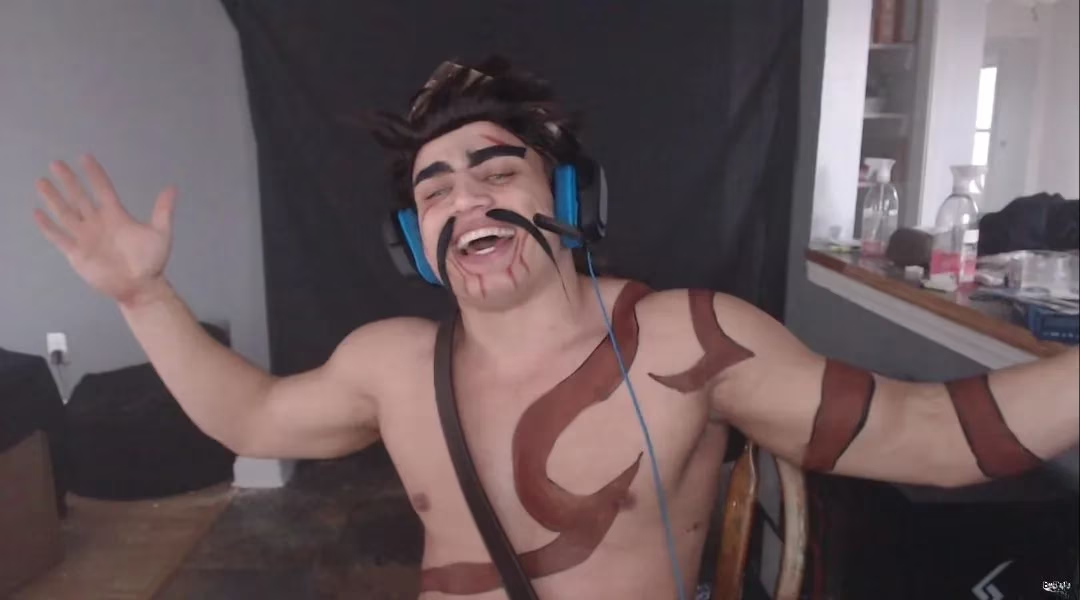
Tyler1 had been banned indefinitely in spring 2016. He was known for strategies built on trolling teammates and opponents, plus extremely toxic behavior. Riot's decision was controversial but understandable. Yet the streamer had cultivated a massive following before the ban, and his fans never let the community forget it. Every high-profile League event's Twitch chat became a battlefield of 'free Tyler1' chants. When Riot caved, it did not just unlock an account. It unlocked a cultural moment.
The numbers were absurd. The previous record for most concurrent viewers for a non-event stream belonged to Faker, the consensus best League of Legends player in esports history. Faker peaked at 245,000 concurrent viewers during his first streaming forays. Tyler1's return climbed past 300,000 concurrent viewers in under 20 minutes. At its peak, the stream reached somewhere over 400,000 people. That was not a tournament final. That was one man playing solo queue. Twitch's streaming services went down right around the same time his stream hit 300,000 viewers. The incidents may not have been officially linked, but I have a hard time believing they were unrelated.
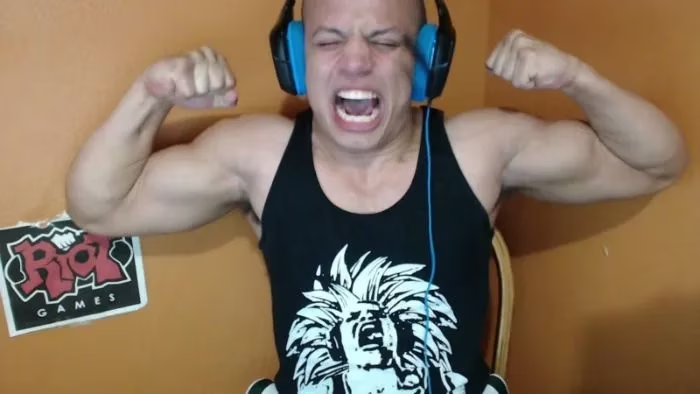
What surprised me more than the raw viewership was his behavior. I expected vintage Tyler1: screaming, blame, and bans waiting to happen. Instead, he showcased a new personality. When teammates made mistakes, he responded with positivity and advice rather than offensive statements. He consistently refuted players and viewers who tried to bait him into falling back on his old, more polarizing habits. He called himself the 'most reformed player' in League of Legends. That label was premature in 2018, but it was not meaningless. If that behavior held, it would be a huge boon to League of Legends and other esports titles looking to be perceived as more legitimate sporting avenues.
In 2026, the context has changed. Esports has moved closer to mainstream legitimacy, though not exactly through the 2022 Olympic debut that some hoped for. The Olympic Esports Games are now set for 2027, and titles like League of Legends continue to sit at the center of that conversation. Riot's behavioral systems have evolved, and streamers face more scrutiny than ever. Tyler1's return did not single-handedly fix toxicity, but it proved something important: a redemption arc could draw more attention than a villain arc. It also proved that individual streamers could overwhelm platform infrastructure and shape the public image of a game.
Here is how I break down the key facts from that night:
| Category | Detail |
|---|---|
| Streamer | Tyler 'Tyler1' Steinkamp |
| Game | League of Legends |
| Ban | Indefinite, spring 2016 |
| Return date | January 8, 2018 |
| Previous non-event record | Faker, 245,000 concurrent viewers |
| Tyler1's peak | Over 400,000 concurrent viewers |
| Time to 300k | Under 20 minutes |
| Twitch status | Services went down around the same time |
The record itself has been surpassed many times since, but the blueprint remains. A banned creator can return, if the platform and publisher allow it. A toxic reputation can be rewritten, if the creator actually does the work. A single stream can become a news event, a stress test, and a community referendum all at once. I am not saying Tyler1 deserves sainthood. I am saying his first stream back offered hope that his presence, and the huge influence he wields over League of Legends player toxicity, might be a net positive for Riot Games and the League community.
In 2026, I still see his influence in how streamers handle comeback arcs, how Riot communicates bans, and how fans demand second chances for their favorite personalities. The 'most reformed player' title is still up for debate. But the night of January 8, 2018, is not. It broke Twitch, broke a record, and broke the idea that a ban had to be the end of the story. That is why I still tell newer League fans about it. They missed the chaos live, but they live in the world it helped create. 🎮📈