
In a week that now feels like a nostalgic snapshot from a bygone era, the UK video game physical sales charts for the 18th week of 2017 told a story of enduring quality and fresh ambition. Nintendo’s Mario Kart 8 Deluxe — the enhanced Switch port of the 2014 Wii U classic — refused to relinquish its crown for the second consecutive week, proving that the series’ charm had only grown with time.
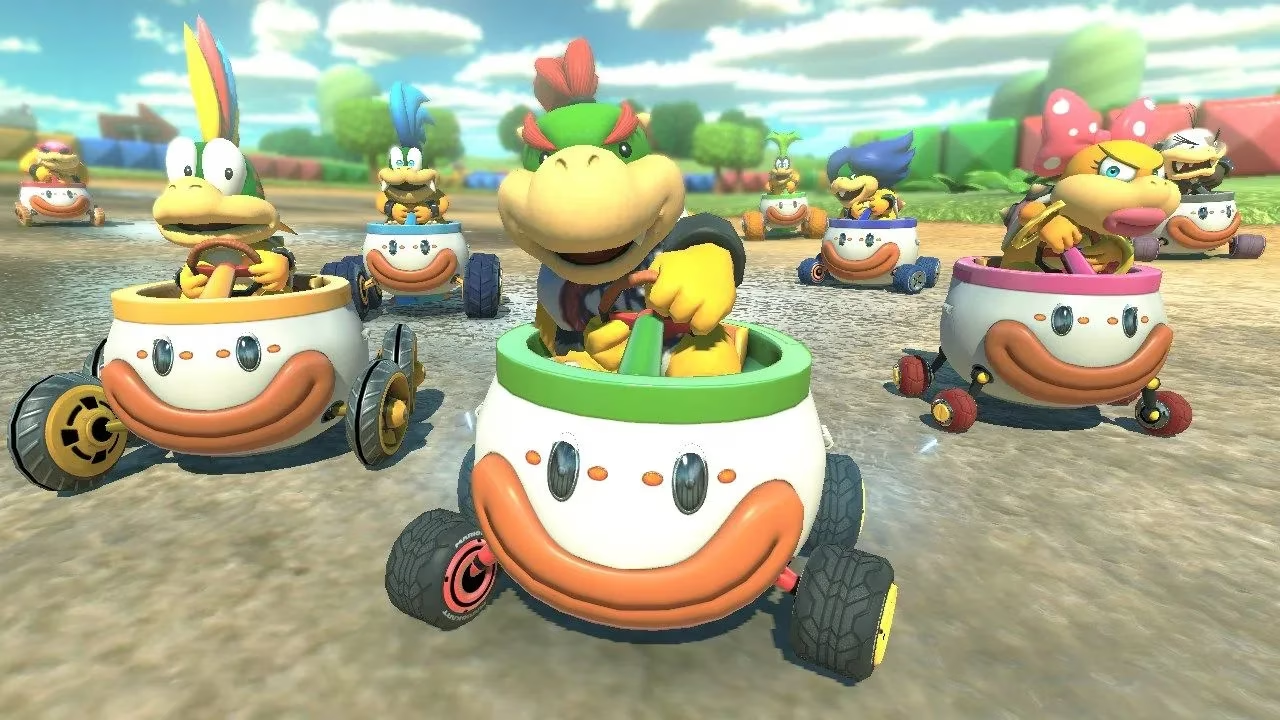
As reported by UK chart trackers, the week ending May 6, 2017 was yet another triumph for the Mushroom Kingdom. With Mario Kart 8 Deluxe leading the physical sales, one has to ask: what was it about this racing gem that made it such a phenomenon? The answer lies partly in the Switch’s burgeoning popularity and partly in the game’s own refined mechanics — 48 tracks, revamped battle mode, and the sheer joy of local multiplayer. Even in 2026, looking back, one can’t help but admire how a title originally crafted for the Wii U ignited such a fire.
But the real surprise of the week came from Prey, Arkane Studios’ immersive sci-fi thriller published by Bethesda. The game had only launched on Friday, May 5, yet it managed to claim the second spot by the time the charts closed on Saturday. How remarkable was that? Consider this: Prey had just two days of sales to compete against a full week of Mario Kart 8 Deluxe. If it had enjoyed a full seven-day window, could it have challenged for the top position? That’s a question fans debated passionately at the time.
Prey went on to become a cult classic, praised for its level design and narrative, but its initial chart performance showed that even a short debut could rattle the standings. Arkane’s dedication to player freedom and atmospheric storytelling clearly resonated enough to drive immediate physical purchases. Yet, one wonders: was the retail presence enough to capture the full magnitude of interest, or did the growing digital market — not captured in these figures — hide an even larger army of players?
Meanwhile, other titles witnessed significant shifts. Sniper Ghost Warrior 3, which had held the number 2 spot the previous week, plummeted to 13th place. Similarly, the eerie platformer Little Nightmares slipped from 4th to 12th. Such declines are not unusual in a dynamic market — after all, how long can a tactical shooter or a horror adventure sustain momentum against heavy hitters? The chart reflects a natural cooling period for these titles, but also underscores the competitive whirlwind of spring 2017. Did they lack the multiplayer appeal that kept Mario Kart soaring? Or was it simply a case of the initial sales burst exhausting the core fanbase?
It’s worth noting that these rankings are based solely on physical retail sales; digital downloads were not included in the weekly reports of that era. This caveat is crucial, especially when examining games like Prey that might have had stronger digital uptake. In 2026, the landscape has transformed entirely, with digital dominating, but in 2017 physical copies still carried immense weight. If digital sales had been counted, would the ordering have shifted dramatically? Probably yes, but the physical chart still serves as a powerful indicator of mainstream gamer preference.
To put Mario Kart 8 Deluxe’s dominance into perspective, one need only glance at its U.S. figures: a staggering 459,000 units sold on its first day alone, setting a franchise record. It wasn’t just a racing game; it was a system seller. The Switch itself was still in its honeymoon months, and Mario Kart became the perfect companion for new console owners. Was it the familiar characters, the tight controls, or the promise of endless multiplayer fun? Probably all of the above. The Deluxe version took everything players loved about the Wii U entry and supercharged it with smart improvements, making it an irresistible buy even for those who had played the original.
Although the full top 40 was not itemized in early reports, industry observers recall that stalwarts like Grand Theft Auto V, FIFA 17, and Call of Duty: Infinite Warfare likely rounded out the top five, as they had maintained a firm grip on the charts for months. These evergreen blockbusters reinforced a pattern: new releases could cause blips, but established giants rarely left the spotlight for long.
The week 18 chart also serves as a time capsule. Looking back from 2026, we see how games that defined an era — Mario Kart 8 Deluxe eventually sold over 60 million copies worldwide — began their reign. At the same time, Prey reminded everyone that innovation doesn’t always translate into immediate blockbuster sales, but it can leave a lasting legacy. Isn’t it fascinating that a port could outperform brand-new AAA releases and that a cerebral shooter could carve its name despite only two days of sales?
In the end, the UK physical charts of May 2017 showcase a moment when a delightful kart racer refused to slow down and a cerebral shooter dared to make a splash. For players today, it’s a nostalgic reminder of an industry on the cusp of a digital revolution, yet still revolving around discs and cartridges. The lesson? Quality gameplay, compelling worlds, and smart marketing remain timeless ingredients for success — no matter the decade, and regardless of whether the box is made of cardboard or bits.
Data referenced from NPD Group helps contextualize why a Switch cornerstone like Mario Kart 8 Deluxe could dominate retail charts in 2017: strong hardware momentum, attach rates driven by accessible multiplayer staples, and the outsized influence of evergreen franchises on physical shelf space all tend to amplify early-cycle hits—especially when digital sales are excluded from weekly tallies.