
The world of League of Legends is no stranger to wild champion designs, flashy skins, and passionate fan debates. But one legal battle involving a retired soccer star turned out to be far more serious than the usual in-game banter. Riot Games found itself on the losing end of a lawsuit after a court ruled that the Striker Lucian skin borrowed too much from the likeness of former Dutch soccer player Edgar Davids. In 2026, the case still stands as a fascinating example of how real-world identity can collide with virtual cosmetics.
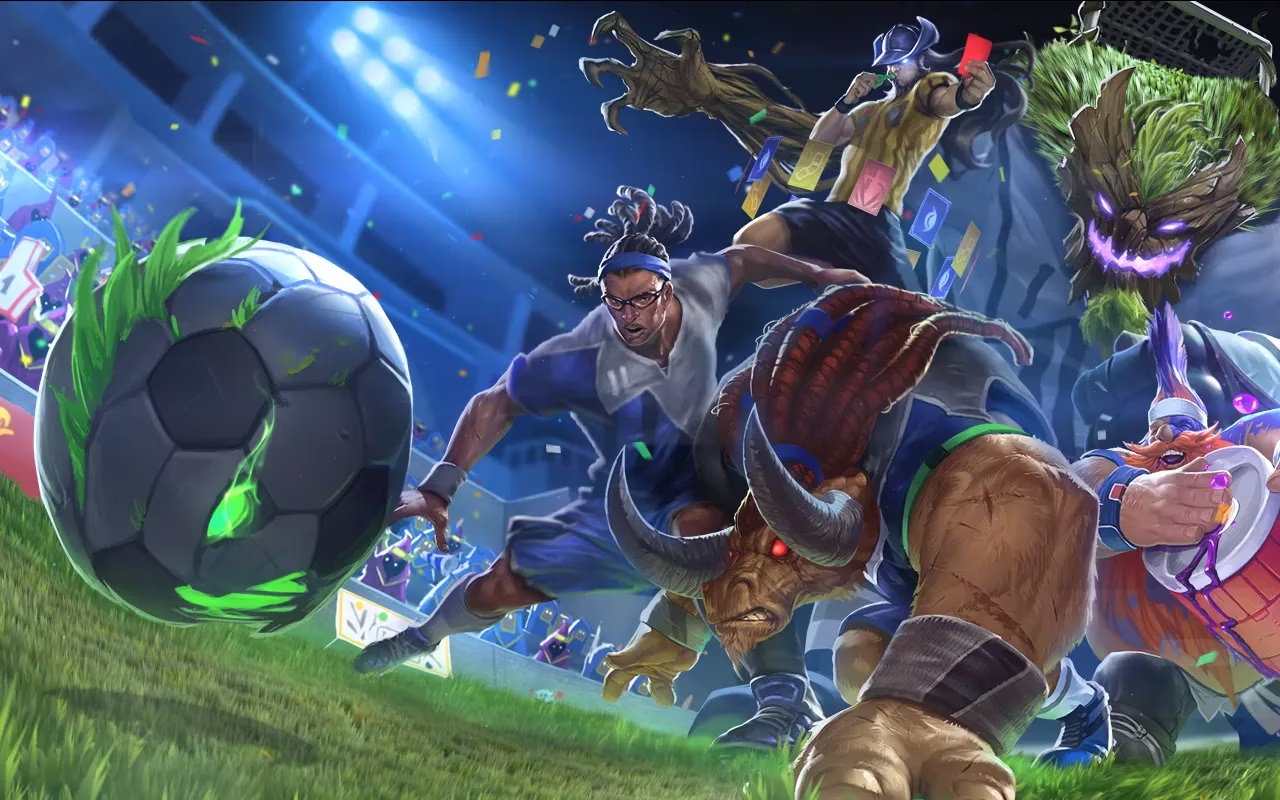
The trouble started years before the case reached a courtroom. Striker Lucian was released in 2014 as part of a soccer-themed skin line. The skin gave Lucian a sporty look that many players immediately connected to Edgar Davids. The most obvious clue was the protective glasses. Davids was famous for wearing tinted goggles on the pitch because of glaucoma, and Striker Lucian had a nearly identical accessory. Add in the athletic shorts, socks, and general confident soccer-player energy, and the similarity was hard to miss.
Edgar Davids noticed the resemblance as well. Back in 2015, he asked Riot Games to stop using the skin because he believed it used his likeness without permission. Riot did not agree. According to Dutch outlet Het Parool, the company argued that the similarities between the former professional soccer player and Striker Lucian were not as strong as Davids claimed. Riot’s position was that the skin was simply a generic soccer-inspired design, not a deliberate copy of one specific athlete.
That defense, however, became difficult to maintain when old social media evidence surfaced. A tweet posted in 2014 by a former QA analyst at Riot Games said plainly, “for all you wondering, Striker Lucian was inspired by soccer pro Edgar Davids.” The tweet was later deleted and the account was locked, but by then the damage was done. The court still received the evidence, and it gave Davids a major advantage. A single offhand comment from a developer can sometimes carry more weight than a company’s formal legal argument.
In the end, the judge sided with Davids. The court ordered Riot Games to reveal to auditors how much money the Striker Lucian skin had earned since its release. Davids would then receive compensation based on those earnings. The decision was a significant moment for athletes, celebrities, and even fictional characters. It made clear that a digital skin is not automatically protected from likeness claims just because it exists inside a video game.
From a player’s perspective, skins are often seen as harmless fun. They change how a champion looks, add fresh effects, and give fans a way to personalize their experience. But from a business perspective, skins are an enormous source of revenue for League of Legends. Riot Games has built one of the most successful free-to-play models in gaming history, and cosmetic items are at the heart of that model. The Striker Lucian skin was not just a fun nod to soccer culture. It was a digital product that generated real income, which is exactly why the court wanted to inspect its earnings.
Here is a quick breakdown of the key events:
| Year | What Happened |
|---|---|
| 2014 | Striker Lucian skin is released |
| 2014 | A former QA analyst tweets that the skin was inspired by Edgar Davids |
| 2015 | Davids asks Riot Games to stop using the skin |
| Later | Riot argues the similarities are not relevant |
| Court ruling | Riot is ordered to reveal skin earnings for compensation |
The case also raised a broader question about inspiration versus imitation. Game developers frequently borrow from sports, movies, music, and pop culture. Sometimes the inspiration is obvious, and sometimes it is subtle. The line between homage and unauthorized likeness can be blurry. In this situation, the visual clues were strong enough to convince a court that Edgar Davids had a legitimate claim.
For fans of League of Legends, the Striker Lucian skin remains a memorable part of the game’s history. Some players still associate the skin with the famous Dutch midfielder, while others simply see it as a cool soccer-themed cosmetic. Either way, the legal dispute gave the skin an unusual legacy. It became less about whether Lucian looked good in soccer gear and more about who had the right to profit from that look.
Riot Games has continued to release countless skins since then, and League of Legends remains one of the most popular MOBAs in the world. The game first launched in 2009, inspired by the Warcraft III: The Frozen Throne mod Defense of the Ancients. Over the years, it has built a massive fan base and become a dominant force on streaming platforms like Twitch. The Edgar Davids lawsuit did not slow that momentum, but it did remind the industry that even a virtual outfit can carry real-world legal consequences.
In the end, the story of Striker Lucian is about more than a skin. It is about identity, creativity, and money in modern gaming. A soccer legend took a gaming giant to court and won. For players, it is a curious piece of League of Legends history. For developers, it is a warning: if a design looks like a real person, that person might just come looking for their share.