
Cast your mind back to the wild, untamed frontier of 2017, when a single regulatory earthquake out of China sent shockwaves through the global gaming industry that are still reshaping the landscape almost a decade later. Those who were there will remember it like it was yesterday: Beijing dropped the mother of all truth bombs, decreeing that every single game peddling loot boxes within its digital borders had to rip the curtain back and reveal the actual drop odds. Fast-forward to 2026, and what started as a regional compliance headache has metastasized into a full-blown transparency pandemic, forcing developers from Shanghai to Seattle to either come clean or get steamrolled by an army of informed gamers wielding spreadsheets like Excalibur. Back then, the move was seismic. Publishers found themselves split into two frantic camps—those who scrambled to publish their numbers, and those who went dark, suspending loot boxes in China entirely rather than expose their algorithmic sausage-making. The sheer terror of letting players peek behind the curtain was so palpable you could almost taste it over a bad microtransaction.
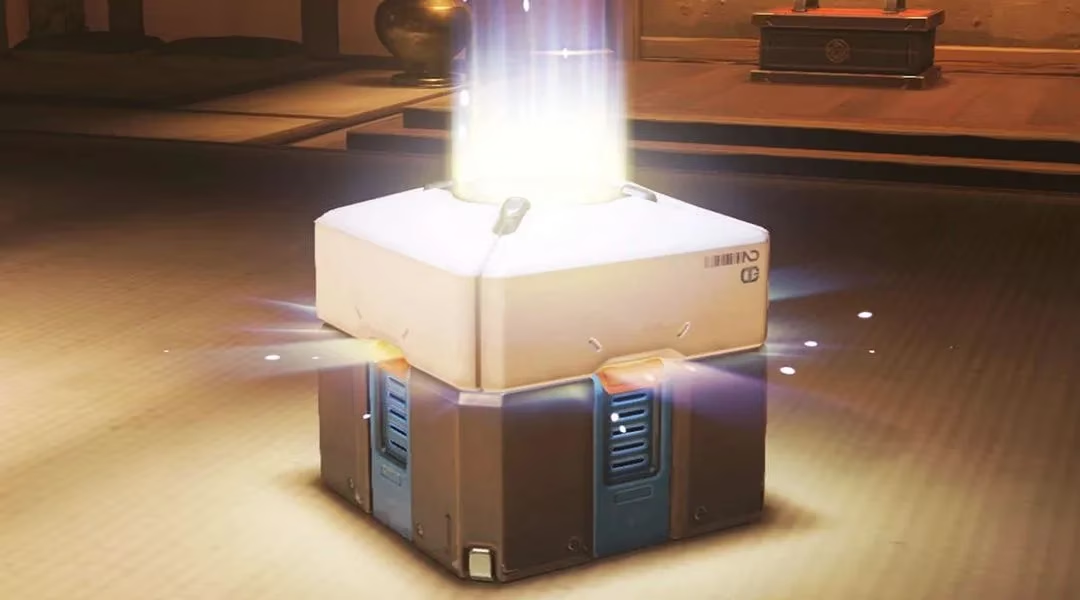
Holy smokes, the panic was real! Some big-name studios, smelling the coffee, realized they could play a deadlier game: stall. They deliberately held back their data, swallowing the temporary microtransaction revenue hit just to see what their rivals’ numbers looked like when splashed across Reddit and NeoGAF. The thinking was as cynical as it was brilliant—let Blizzard or Riot take the first punch, gauge the public outcry, and then tweak their own odds behind the scenes before reluctantly showing their hand. In those early days, the global gaming community turned into a hive of amateur statisticians and armchair detectives, furiously translating Chinese-language drop tables and cross-referencing them with their own abysmal luck in other regions. The million-dollar question on every forum warrior’s lips was: “Are these rates the same everywhere, or did they crank up the mercy for China while the rest of us keep getting fleeced?” The ambiguity was a ticking time bomb, and the collective side-eye aimed at developers could have melted servers.
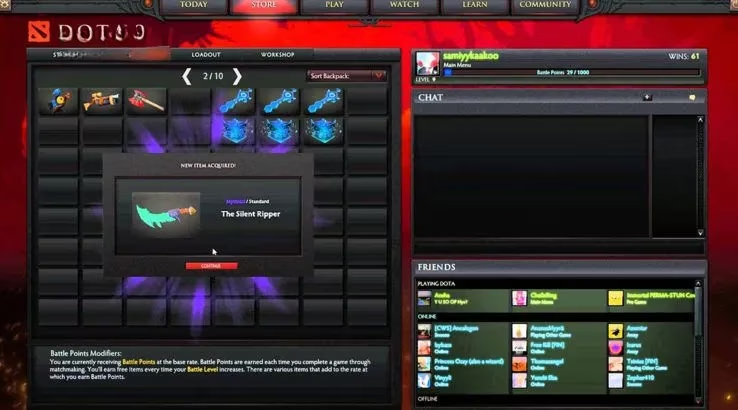
What happened next was nothing short of a global chain reaction that turned 2026 into the Year of the Great Unveiling. Spurred by the avalanche of positive reception from Chinese gamers—who, surprise surprise, actually enjoyed knowing they weren’t just burning cash in a digital bonfire of vanity—other jurisdictions began sharpening their regulatory knives. The European Union, already itching to classify loot boxes as gambling, pointed to China’s success and said, “Hold my beer.” By 2024, a cascade of countries from Brazil to Australia had drafted their own mandatory odds disclosure laws, effectively making China’s 2017 experiment the default standard for Planet Earth. Developers who once guarded their drop tables like a dragon hoarding gold now had to paste those probabilities right on the purchase screen, in every language, for every region. The age of the opaque casino-in-a-box was officially dead, and its corpse was being danced upon by a generation of gamers who’d memorized the meaning of terms like “pity timer” and “binomial distribution” before they could drive.

And the impact? It’s a chef’s kiss of historical irony. The very data that publishers fought tooth and nail to conceal has become their new marketing battleground. In 2026, you can’t swing a virtual cat without hitting a storefront boasting “Boosted Legendary Rates – Now 0.5%! (That’s 5x Our 2019 Secret Number, Folks!)” The transparency tsunami forced a beautiful, awkward race to the top. Games that clung to predatory, sub-0.01% rarity tiers were publicly shamed into oblivion by community-run dashboards that aggregate global drop statistics in real time. The side effect? A massive surge in player spending, because when you know the exact 80th-pull guarantee will nail you that five-star waifu, you suddenly feel less like a gambler and more like a savvy shopper. Developer revenues, after an initial cold sweat, have actually ballooned as trust converted lurkers into whales. Who would have thought that treating customers with a shred of dignity could be such a game-changer? The whole saga is a glorious testament to the idea that when China sneezes, the gaming world catches a cold—and in this case, it turned out to be the healthiest cold humanity ever endured.